Halkidiki & Thessaloniki
Thessaloniki is where Greeks go to eat. An hour south, Halkidiki's three fingers give you pine forest, Blue Flag water and, on the third, the monastic republic of Mount Athos.
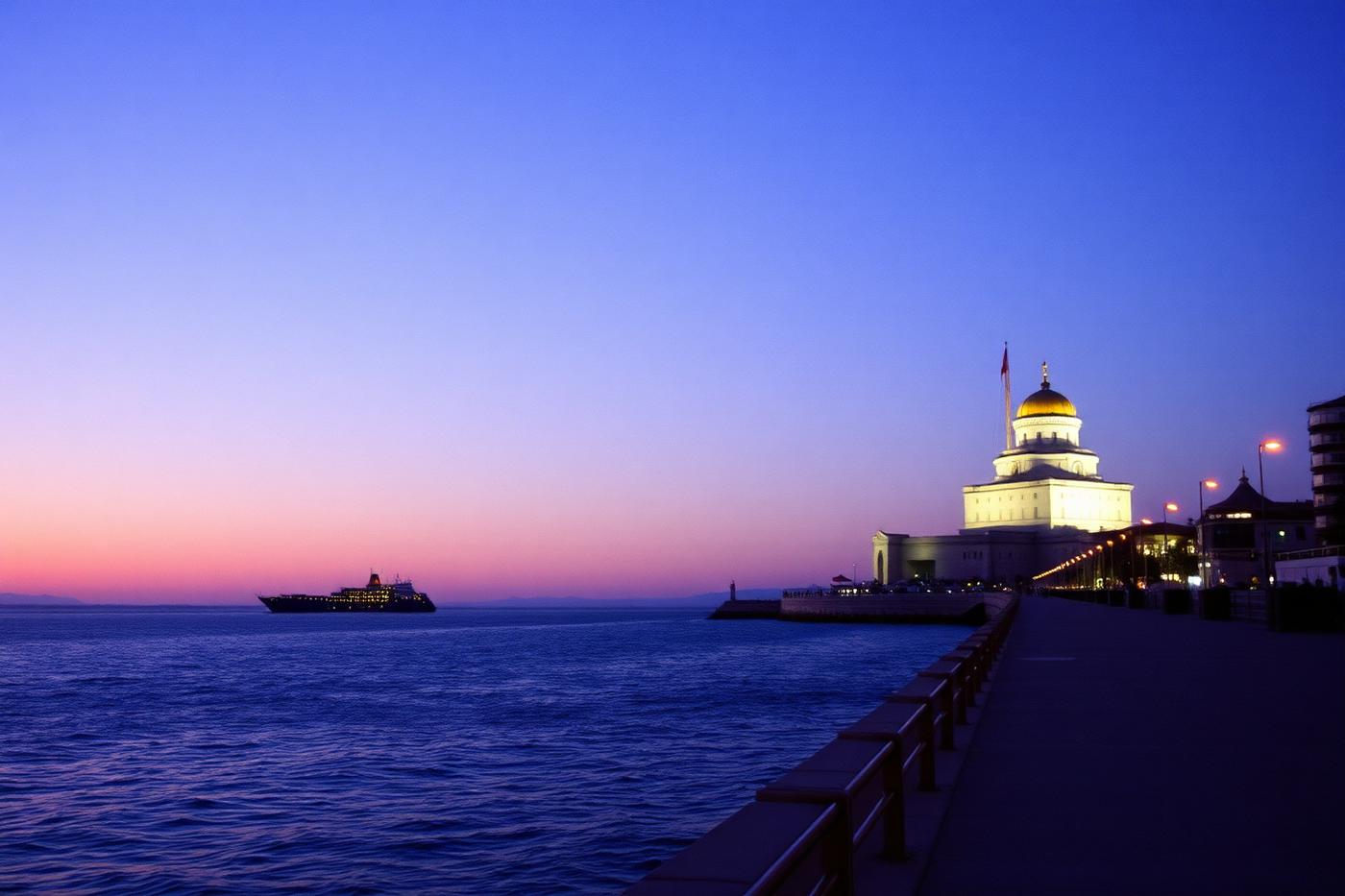
Thessaloniki, evening 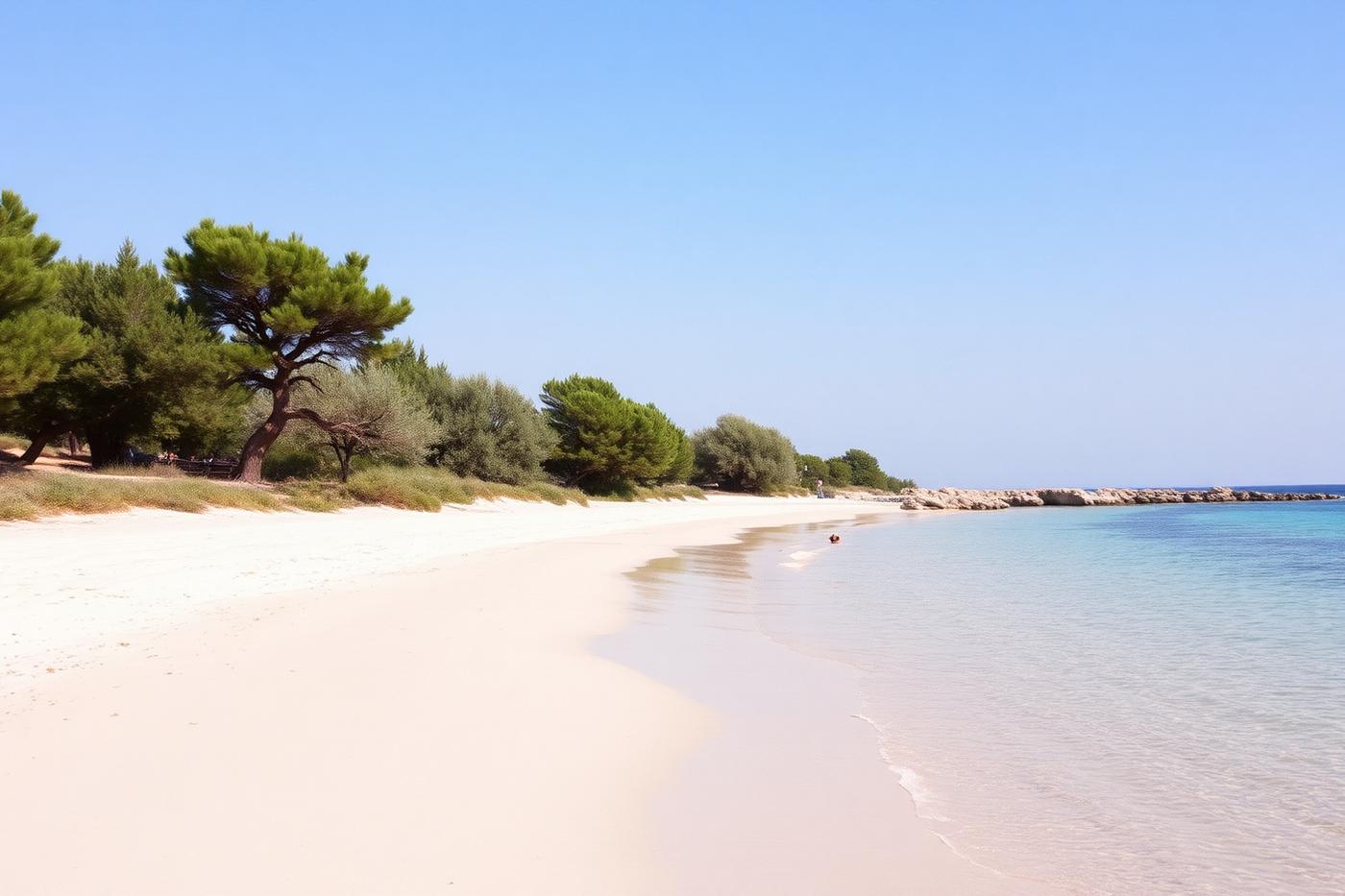
Sithonia, September - Image slotEating Thessaloniki properly — Halkidiki & Thessaloniki. A morning in the markets, bougatsa, and a long evening of small plates in Ladadika.
- Image slotThe Athos coastline by boat — Halkidiki & Thessaloniki. Twenty monasteries seen from the water, some of them a thousand years old.
- Image slotVergina — Halkidiki & Thessaloniki. Descend into the tomb of Philip II, with the grave goods displayed where they were found.
- Image slotSailing Sithonia — Halkidiki & Thessaloniki. Diaporos and the islets off Vourvourou — shallow, clear, and easy water.
The character of the place
Thessaloniki is a Byzantine, Ottoman and Sephardic city that has never entirely become a Greek one, and its food carries all three. It is compact, waterfront, and full of small kitchens doing one thing extremely well — the Modiano and Kapani markets, the Ladadika, and a coffee culture that runs to three hours.
Kassandra, the first finger, is the developed one. Sithonia, the second, is the one to take: pine down to the sand, small bays, sailing water and no high-rise. Athos, the third, is an autonomous Orthodox monastic state — closed to women entirely, and to men without a permit, but its coastline is seen from the sea.
Behind them: Vergina and the royal tombs of Macedon, with Philip II's gold still underground where it was found, and Pella, Alexander's birthplace.
Worth the day
Eating Thessaloniki properly
A morning in the markets, bougatsa, and a long evening of small plates in Ladadika.
The Athos coastline by boat
Twenty monasteries seen from the water, some of them a thousand years old.
Vergina
Descend into the tomb of Philip II, with the grave goods displayed where they were found.
Sailing Sithonia
Diaporos and the islets off Vourvourou — shallow, clear, and easy water.
Where to base yourself
Thessaloniki waterfront or Ano Poli
The promenade and the markets, or the Ottoman upper town inside the walls.
Vourvourou or Porto Koufo, Sithonia
A cluster of small islands and the deepest natural harbour in Greece.
Ouranoupoli
The last town before Athos, and the departure point for the coastal cruise.
What to skip
The Kassandra resort strip in August. Sithonia is twenty minutes further and a different holiday.
Three ways this region is travelled
Worked examples, not products. Each opens day by day, with the route drawn on a map.
7 days · May – June, September
Thessaloniki's table, Sithonia's water
- Thessaloniki
- Ano Poli
- Vourvourou
- Porto Koufo
- Thessaloniki
Three days of eating and Byzantine streets, then four of pine forest and clear water.
6 days · April – June, September – October
Royal tombs, then the sea
- Thessaloniki
- Vergina
- Pella
- Kassandra
The Macedonian sites behind the city, then a short run down to the first peninsula.
5 days · May – June, September – October
The monastic coast, seen from the water
- Thessaloniki
- Ouranoupoli
- Athos coastal cruise
- Ammouliani
The third finger of Halkidiki, closed on land but open, and extraordinary, from the sea.
Pairs well with
- Macedonia (north)
Kaimaktsalan, Edessa and Prespa are all within two hours.
- Sporades
A short flight or a long drive to the pine islands.