Pelion & Magnesia
A peninsula where you can ski in the morning and swim in the afternoon, with cobbled paths between stone villages, apple and chestnut orchards, and a narrow-gauge steam railway.
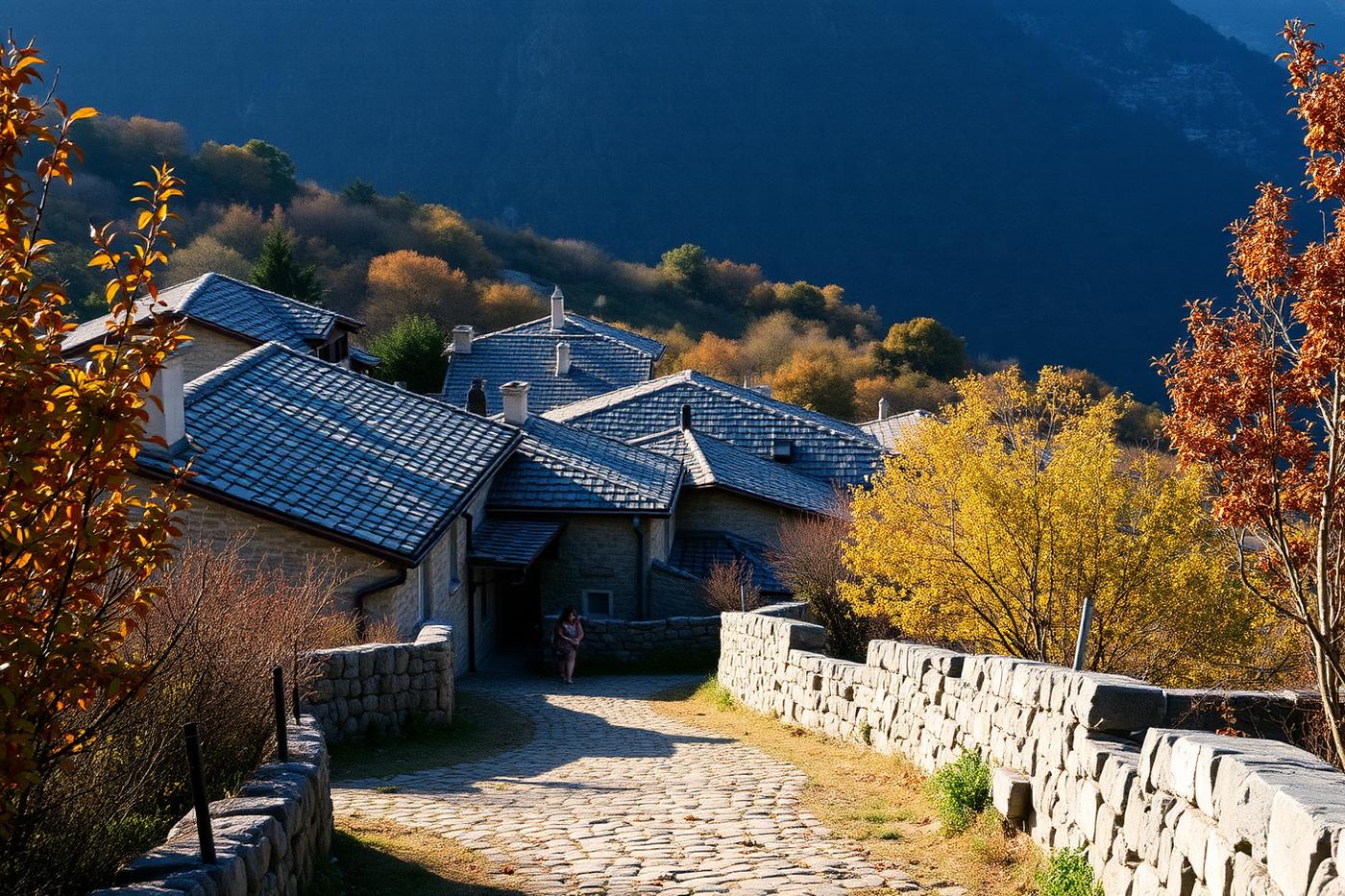
East Pelion, October 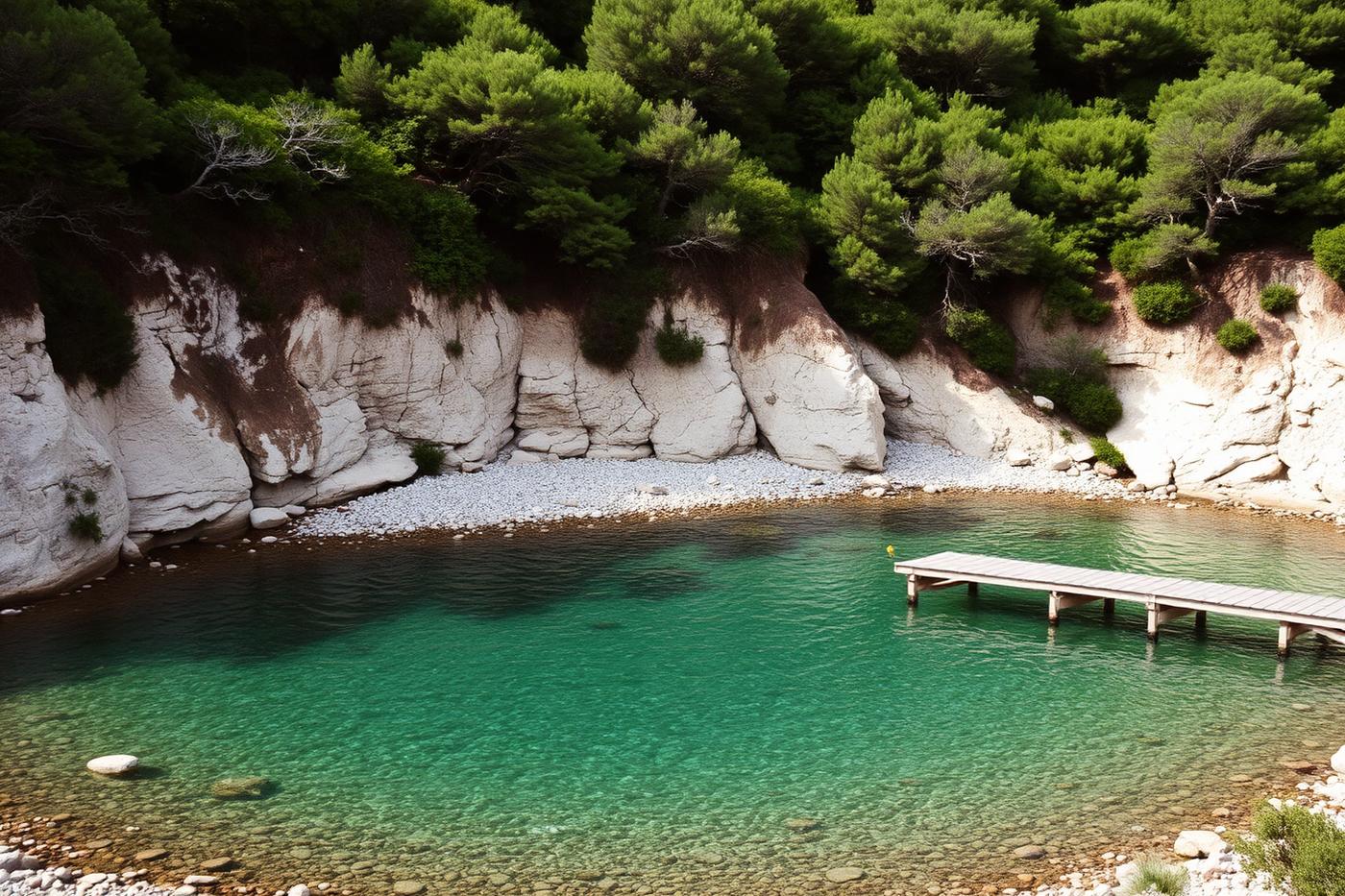
Damouchari - Image slotThe Pelion railway — Pelion & Magnesia. A narrow-gauge line designed by Evaristo de Chirico, father of the painter, over stone viaducts.
- Image slotKalderimi walking — Pelion & Magnesia. Tsagarada to Damouchari, downhill through forest, ending at a sea you swim in.
- Image slotSki Agriolefkes, then swim — Pelion & Magnesia. A small ski centre at 1,500 metres, forty minutes from a beach. In February both work.
- Image slotA tsipouradiko in Volos — Pelion & Magnesia. Order by the round; the food arrives on its own logic.
The character of the place
Pelion has two coasts. The Pagasetic Gulf side is sheltered, olive-covered and calm; the Aegean side is open, forested and has the better beaches — Mylopotamos, Fakistra, Damouchari. Between them runs a mountain ridge with villages at seven hundred metres.
The villages — Makrinitsa, Vizitsa, Tsagarada, Zagora — are eighteenth- and nineteenth-century stone, with slate roofs, plane-tree squares and mansion houses built on silk and shipping money. The kalderimia between them are the best walking network on the Greek mainland.
Volos below is a working port with a specific institution: the tsipouradiko, where each small tsipouro brings an unrequested plate of food, and the sequence goes on until you stop ordering.
Worth the day
The Pelion railway
A narrow-gauge line designed by Evaristo de Chirico, father of the painter, over stone viaducts.
Kalderimi walking
Tsagarada to Damouchari, downhill through forest, ending at a sea you swim in.
Ski Agriolefkes, then swim
A small ski centre at 1,500 metres, forty minutes from a beach. In February both work.
A tsipouradiko in Volos
Order by the round; the food arrives on its own logic.
Where to base yourself
Tsagarada or Mouresi
East Pelion, in the chestnut forest, twenty minutes above the best beaches.
Vizitsa or Makrinitsa
Restored mansion guesthouses with the whole Pagasetic Gulf below.
Horto or Milina, south Pelion
The quiet end, for boats out to the Sporades and empty water.
What to skip
Nothing much — this is one of the few regions where the obvious things are also the good ones.
Three ways this region is travelled
Worked examples, not products. Each opens day by day, with the route drawn on a map.
7 days · May – June, September – October
Stone villages, two coasts
- Volos
- Makrinitsa & Vizitsa
- Tsagarada
- Damouchari
- Volos
Mansion villages above the gulf, then chestnut forest down to the open Aegean side.
5 days · February – March
Ski in the morning, swim by afternoon
- Volos
- Makrinitsa
- Agriolefkes
- Tsagarada
A small ski centre forty minutes from a beach that is still walkable in February.
6 days · May – October
South Pelion, by water
- Volos
- Milina
- Horto
- Trikeri islet
- Argalasti
The quiet southern tip of the peninsula, worked mostly by boat rather than road.
Pairs well with
- Sporades
The ferries leave from Volos, an hour from the villages.
- Macedonia (north)
Meteora sits between the two, and is on the way north.