Epirus & Zagori
The north-west corner: slate-roofed villages in a UNESCO cultural landscape, the Vikos gorge, the Pindus wolves and bears, and a mountain cuisine built on pies. Greece with a fire lit.
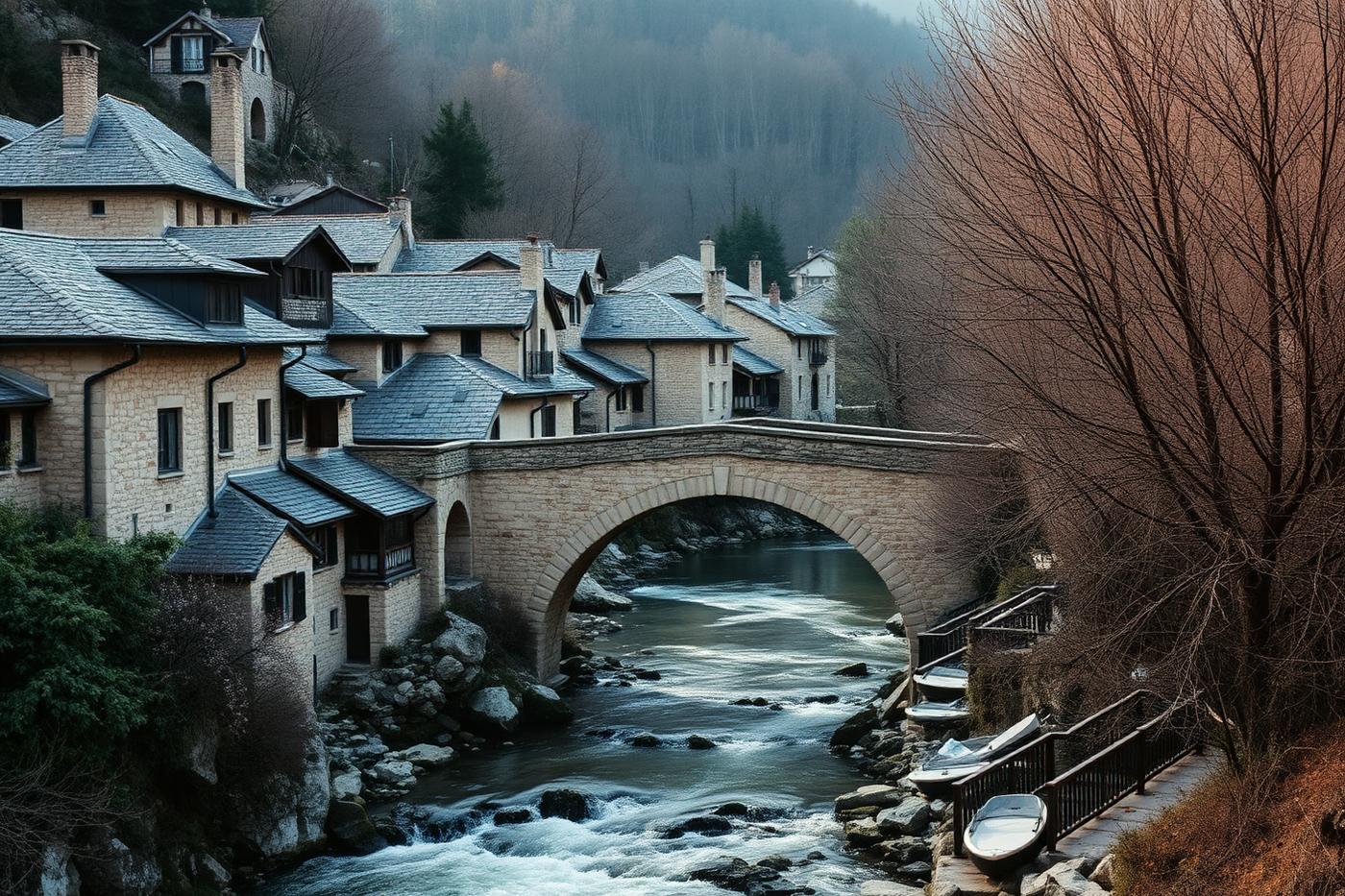
Zagori, in the rain 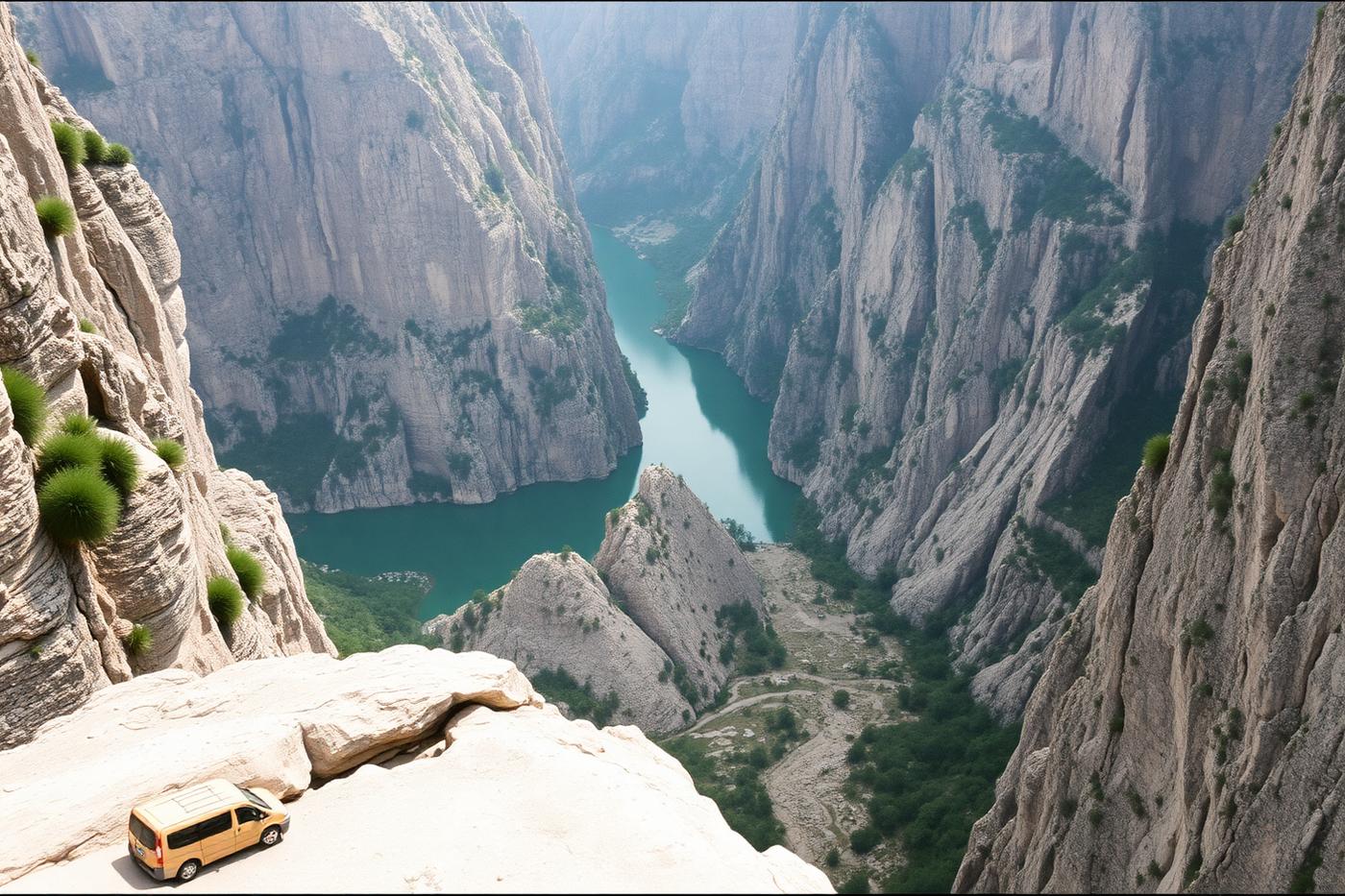
Vikos, from the rim - Image slotThe Vikos gorge floor — Epirus & Zagori. Monodendri to Papingo, six hours, one of the great European day walks.
- Image slotRafting the Voidomatis — Epirus & Zagori. Clear, cold, gentle water through the gorge — genuinely suitable for children.
- Image slotThe stone bridges — Epirus & Zagori. Kokkorou, Plakida, Kalogeriko — three arches, and a walking route that links them.
- Image slotA pie made in front of you — Epirus & Zagori. Filo rolled by hand at six in the morning, the way it has always been done here.
The character of the place
Zagori is forty-six villages linked by cobbled mule paths and single-arch stone bridges, built on the wealth of an eighteenth-century merchant diaspora and preserved because the region emptied and nobody modernised it. It is now a UNESCO cultural landscape.
The Vikos gorge is nine hundred metres deep and in places a thousand wide — the deepest in the world relative to its width. The Voidomatis that runs out of it is spring-fed and, in summer, around nine degrees.
Epirus food is mountain food: hand-rolled pites made before dawn, sheep and goat, wild greens, and a tsipouro culture with meze that arrives whether you order it or not. Ioannina, on its lake, has an Ottoman citadel, a silversmithing tradition and an island in the middle of the water.
Worth the day
The Vikos gorge floor
Monodendri to Papingo, six hours, one of the great European day walks.
Rafting the Voidomatis
Clear, cold, gentle water through the gorge — genuinely suitable for children.
The stone bridges
Kokkorou, Plakida, Kalogeriko — three arches, and a walking route that links them.
A pie made in front of you
Filo rolled by hand at six in the morning, the way it has always been done here.
Where to base yourself
Papingo or Megalo Papingo
Under the Astraka towers, at the north end of the gorge. The classic Zagori base.
Dilofo, Kipoi or Vitsa
Central Zagori — the bridges, the cobbled paths, and the quietest guesthouses.
Ioannina
The lake, the citadel and the food, for a first or last night.
What to skip
Trying to see Zagori in a day trip from Meteora. It deserves three nights minimum.
Three ways this region is travelled
Worked examples, not products. Each opens day by day, with the route drawn on a map.
6 days · May – June, September – October
Zagori on foot, gorge to village
- Ioannina
- Monodendri
- Vikos gorge floor
- Papingo
- Ioannina
Stone villages, arched bridges, and one full day between the walls of the gorge.
5 days · May – October
The eastern villages and the stone bridges
- Ioannina
- Kipoi
- Tsepelovo
- Dilofo
A quieter, shorter route through the less-visited eastern side of Zagori.
5 days · December – March
Zagori in winter, fires and snow
- Ioannina
- Metsovo
- Vasilitsa
- Papingo
The mountain kitchens and stone guesthouses at their quietest and best.
Pairs well with
- Ionian (Eptanese)
Ferry from Corfu and drive up. Sea then mountain, in one week.
- Macedonia (north)
Along the Egnatia to Prespa, Kastoria and Vasilitsa.