The Cyclades — the well-known ones
The islands everyone pictures when they picture Greece: white cubes, black rock, a sea that reads almost purple at midday. They are busy, and they are still extraordinary — the whole game is timing.
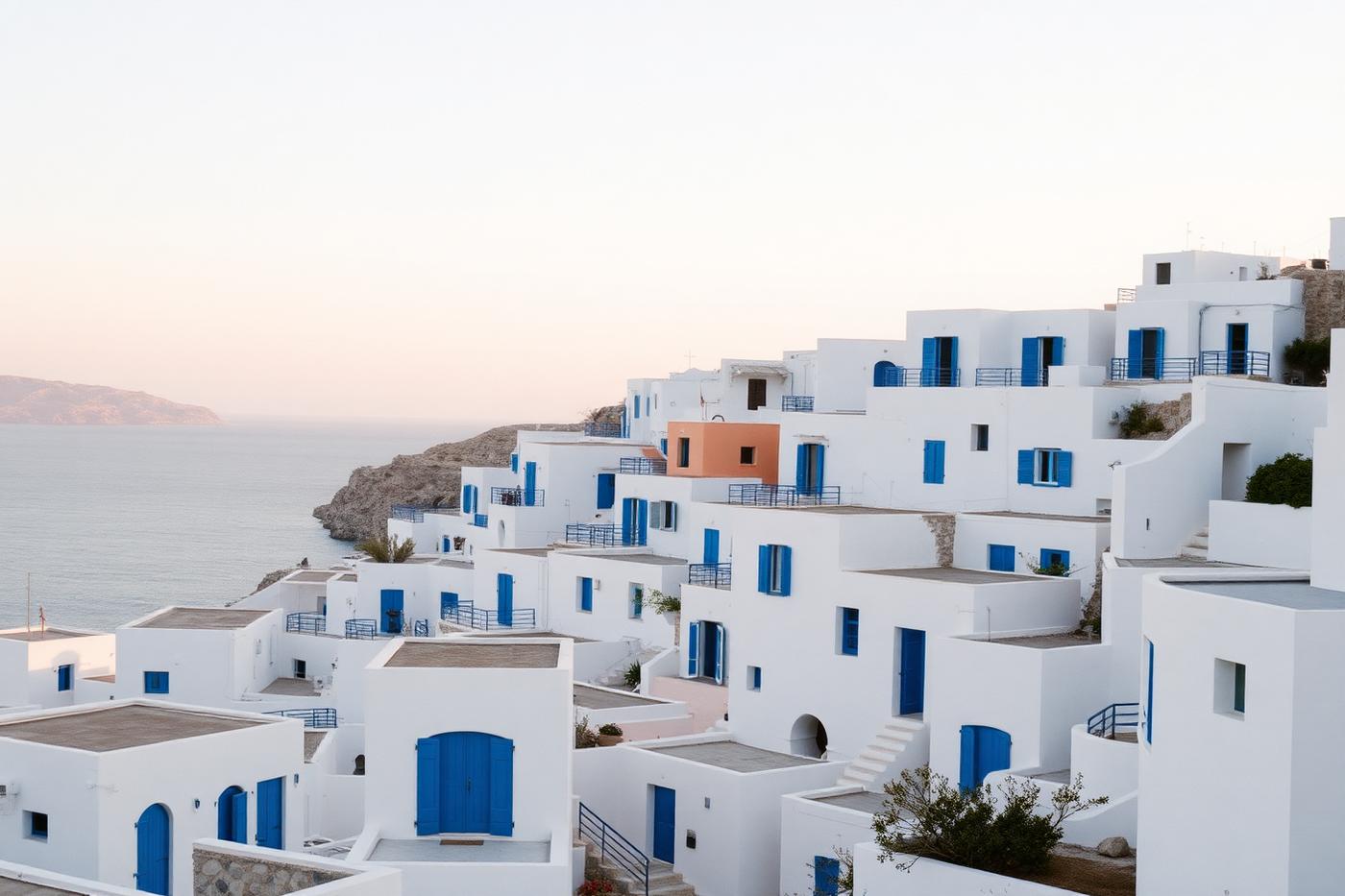
Santorini, before the ships 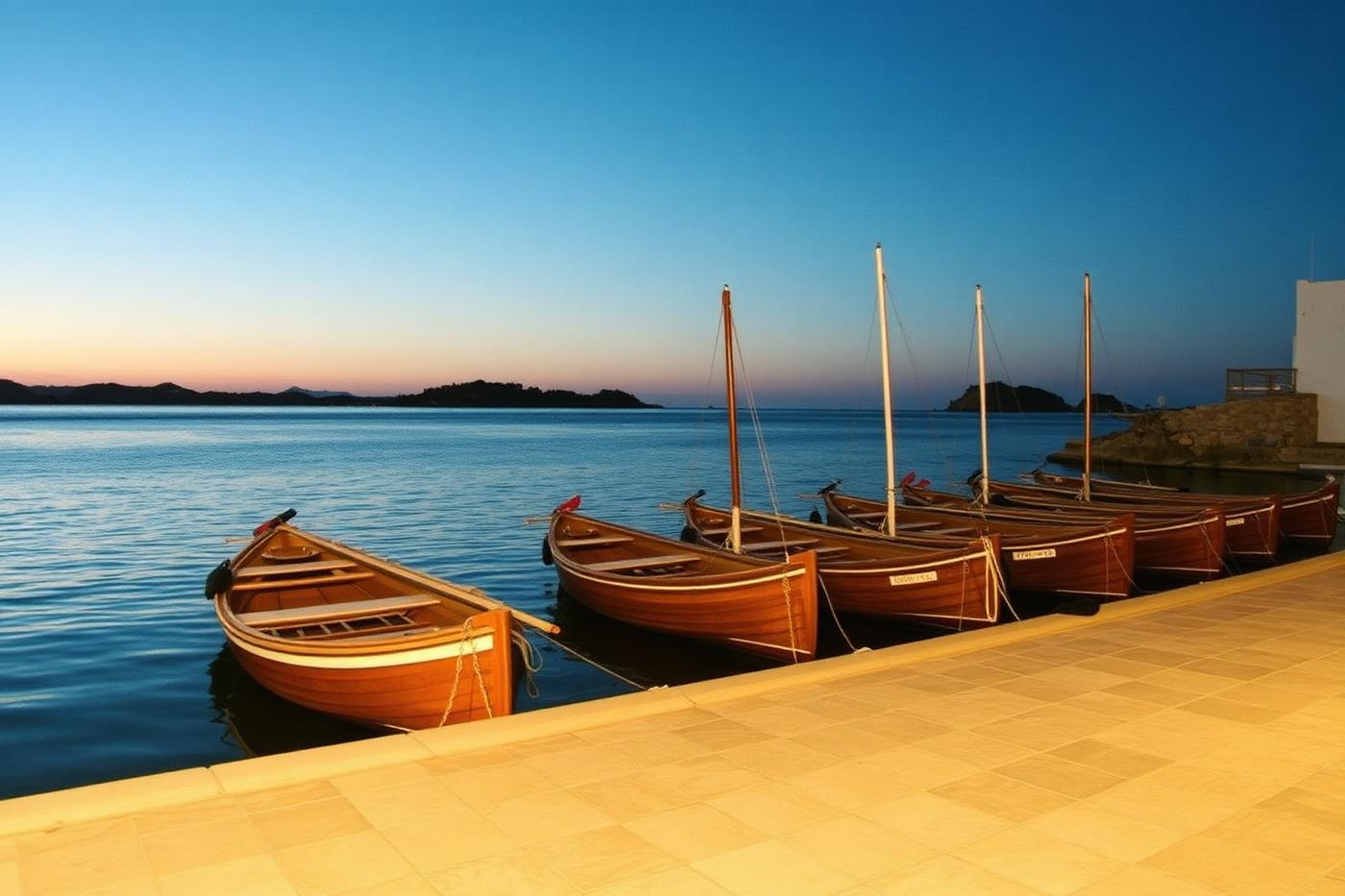
Naxos Chora - Image slotThe caldera by boat, not by road — Cyclades (classic). A private caïque out to the volcanic islets and the hot springs, leaving mid-afternoon and back for sunset on the water.
- Image slotAssyrtiko in the vineyard — Cyclades (classic). Basket-trained vines lying flat in volcanic ash, tasted in a cellar with the person who made it.
- Image slotDelos — Cyclades (classic). An entire uninhabited sacred island, thirty minutes off Mykonos. The most complete ancient city you can walk through in Greece.
- Image slotInland Naxos — Cyclades (classic). Marble villages, a Venetian tower, an emery mine, a kouros lying unfinished in a field where it cracked.
The character of the place
The classic Cyclades are the most photographed landscape in the Mediterranean, and the photographs are not lying. Santorini's caldera really is a drowned volcano with towns balanced on its rim. Paros and Naxos really do have marble villages, working farms and beaches that run for kilometres.
What the photographs leave out is scale of traffic. In July and August Santorini can take five cruise ships in a day, and Oia at sunset is a crowd, not a view. The fix is not to avoid these islands — it is to be on them at seven in the morning and at eight in the evening, and to be somewhere else at noon.
Naxos is the one to know about. It is the largest and most self-sufficient of the group, with a mountain interior, real agriculture, cheese and citron of its own, and long empty sand on the west coast even in August. It absorbs visitors in a way Santorini cannot.
Worth the day
The caldera by boat, not by road
A private caïque out to the volcanic islets and the hot springs, leaving mid-afternoon and back for sunset on the water.
Assyrtiko in the vineyard
Basket-trained vines lying flat in volcanic ash, tasted in a cellar with the person who made it.
Delos
An entire uninhabited sacred island, thirty minutes off Mykonos. The most complete ancient city you can walk through in Greece.
Inland Naxos
Marble villages, a Venetian tower, an emery mine, a kouros lying unfinished in a field where it cracked.
Where to base yourself
Imerovigli or Pyrgos, Santorini
Caldera views without Oia's crowd flow; Pyrgos is inland, higher and quieter.
Naxos Chora or the Tragaea valley
Port-town life, or olive groves and Byzantine chapels twenty minutes inland.
Naoussa, Paros
A working fishing harbour that turned into the best-eating town in the Cyclades.
What to skip
Oia at sunset in August, and any beach club advertising a DJ. Both are avoidable without losing anything.
Three ways this region is travelled
Worked examples, not products. Each opens day by day, with the route drawn on a map.
7 days · Late May – early October
Caldera, then the marble island
- Athens
- Santorini — Imerovigli
- Naxos Chora
- Tragaea valley
- Athens
Three nights of caldera light, then the largest and most self-sufficient of the Cyclades to slow the pace down. One ferry, no rushing.
6 days · May – June, September – October
Naoussa's kitchen and the Paros coast
- Athens
- Naoussa, Paros
- Lefkes
- Naoussa
A single-island week built around a fishing harbour that has become the best-eating town in the Cyclades, with one inland night to see the marble villages behind it.
5 days · May – June, September
Mykonos at the edges, and Delos
- Athens
- Mykonos Chora
- Delos
- Ano Mera
- Mykonos Chora
A short, deliberately narrow trip: Mykonos handled at its quieter hours, with a full day given to the uninhabited sacred island thirty minutes offshore.
Pairs well with
- Athens & Argo-Saronic
Athens is the gateway anyway — give it two nights rather than a transfer.
- Cyclades (off-grid)
Two days of the famous ones, five of the quiet ones. The best-balanced Cycladic week there is.